


Burgos occupies a central position in the history of Castile. Founded in the 9th century as a defensive stronghold on the eastern frontier of the Astur-Leonese kingdom, the city soon acquired a leading political and administrative role. This early prominence explains both its rapid urban consolidation and the notable concentration of civil and ecclesiastical power within its historic core.
The urban layout of Burgos clearly reflects its medieval development. The city centre is compact and structured around spaces associated with power and representation, with narrow streets, squares linked to civil and religious institutions, and a direct relationship between the urban fabric and its main historical landmarks. Burgos is best understood on foot, by reading its urban space rather than by simply accumulating monuments.
El Cid Campeador
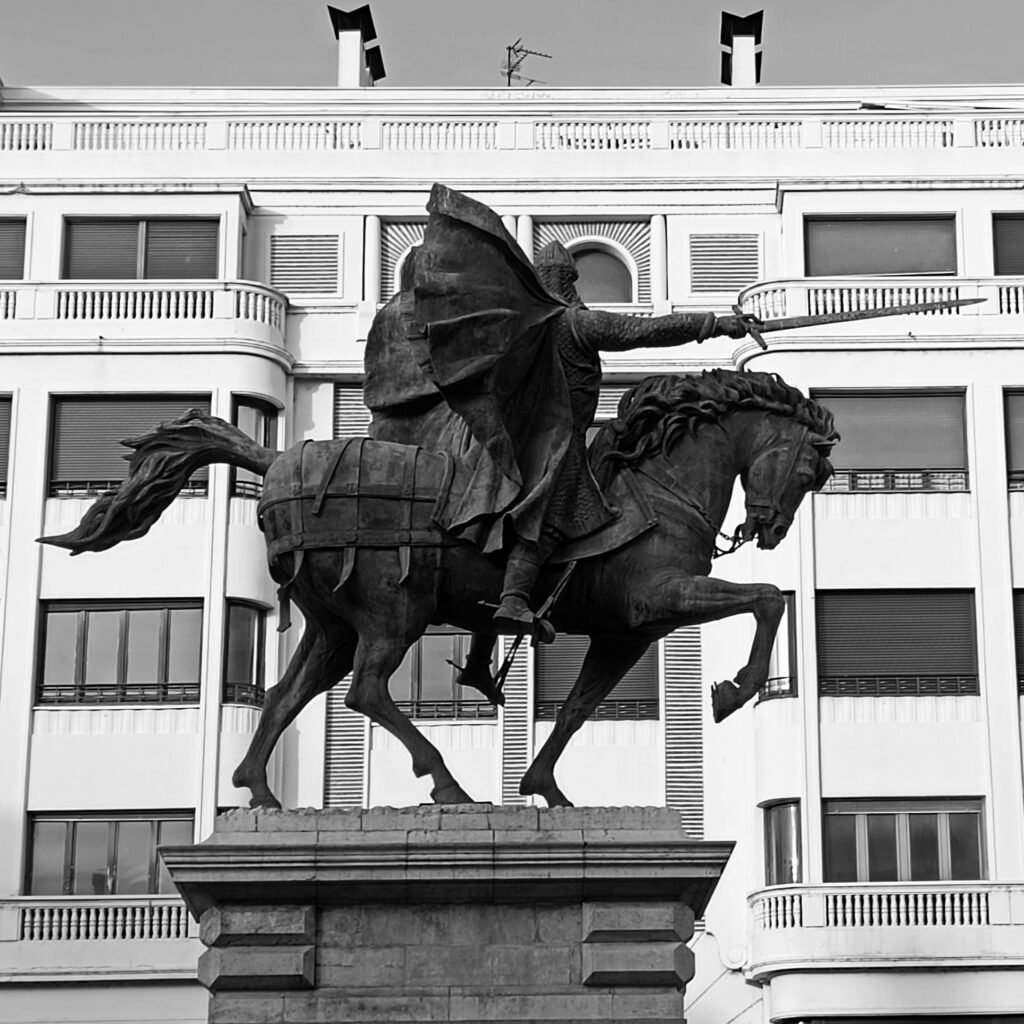
The figure of El Cid Campeador, Rodrigo Díaz de Vivar, maintains a deep connection with Burgos, both historically and symbolically. Beyond the literary and epic construction of the character, El Cid stands as one of the key references in the formation of the Castilian historical imagination since the Middle Ages.
His presence remains visible in the urban landscape. The equestrian statue located in the Plaza del Mio Cid, near the Arco de Santa María and the Paseo del Espolón, has become one of the most recognisable visual landmarks of the historic centre and a common point of reference for understanding Burgos’ historical projection and its place in collective memory.
Burgos Cathedral
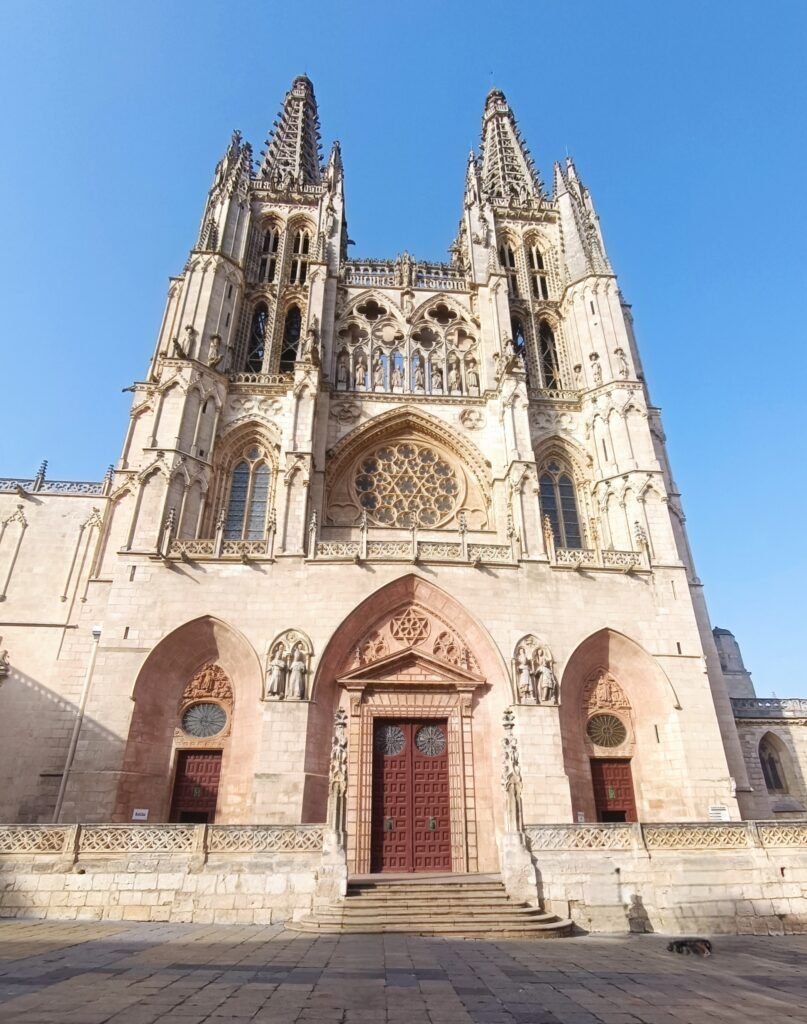
Burgos Cathedral, whose construction began in the early 13th century, is one of the outstanding examples of European Gothic architecture and the city’s most significant monumental landmark. Its construction reflects not only the religious importance of the episcopal see, but also the political and economic relevance that Burgos achieved in medieval Castile during a period of strong urban and territorial consolidation.
Declared a World Heritage Site, the cathedral cannot be understood as an isolated monument. It acts as the true structural axis of the historic centre, around which monumental gateways, squares and urban routes are organised, clearly illustrating the role of Burgos as a centre of power and representation throughout the Middle Ages.
Visits and tickets in Burgos
A visit to the Cathedral is the central highlight of any trip to Burgos. To access the interior and plan the visit at a relaxed pace, it is advisable to purchase tickets in advance, especially on weekends and during periods of higher visitor numbers.
Tickets can also be purchased directly at the ticket office on the day of the visit, although queues are common during peak season and may affect the overall rhythm of the itinerary.
👇 Official tickets for Burgos Cathedral
🍽️ Where to eat in Burgos
Two of the restaurants we recommend are located directly opposite the hotel, a very convenient option both for lunch or dinner and for having a drink without moving far from the accommodation. The third option is just a two-minute walk away, within the same historic quarter.
- La Cantina – located directly across from the hotel, with a lively atmosphere both during the day and in the evening.
👉https://lacantinaburgos.com/ - Las Espuelas del Cid – right next to La Cantina, offering traditional Castilian cuisine in the heart of the historic center.
👉 https://lasespuelasdelcid.es/ - La Favorita (Avellanos Street, 8) – around a two-minute walk from the hotel, within the same historic area.
👉 http://www.lafavoritaburgos.com/
Burgos offers a rich and varied food scene, deeply rooted in Castilian tradition, making it easy to combine cultural sightseeing with well-placed dining options throughout the historic center.
🏨Where to stay in Burgos
Hotel Rice Palacio de los Blasones
The Hotel Rice Palacio de los Blasones is located in the heart of the historic centre, just a short walk from the Cathedral. Its location makes it easy to explore the city centre on foot and dispense with the use of a car during the stay, while also providing convenient access to a wide range of bars and restaurants, both for daytime leisure and evening atmosphere.
The rooms are spacious and functional, some of them arranged over two levels in duplex format, an especially comfortable option for weekend stays or short trips.
The hotel also offers private parking, a valuable advantage given its central location. However, access may be somewhat tight for larger vehicles, a detail worth bearing in mind before arrival.